



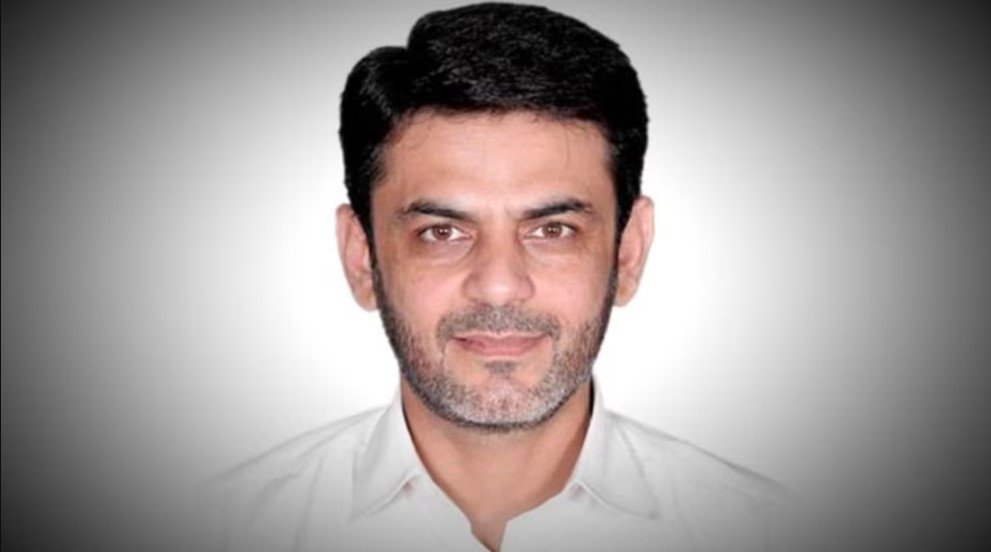
A Pakistani national, Asif Merchant has been sentenced to 330 months in a United States federal prison after being convicted in a plot to arrange the assassination of prominent American political figures, including President Donald Trump. The sentence means Asif Merchant sentenced to 27 years and six months in prison for his role in the alleged Iran-linked murder-for-hire operation.
The sentence was announced on November 17, 2026, by the US Attorney’s Office for the Eastern District of New York. US District Judge Eric R. Komitee handed down the punishment in federal court in Brooklyn after a jury convicted Merchant in March 2026 of attempting to commit an act of terrorism transcending national boundaries and murder for hire. Merchant, 48, was accused of travelling to the United States in 2024 to recruit people who could carry out attacks against American political figures. According to prosecutors, the operation was connected to Iran’s Islamic Revolutionary Guard Corps (IRGC), which they said had tasked him with arranging political assassinations on US soil.
The case centred on an alleged plan to kill a prominent US politician during the 2024 presidential election campaign. According to evidence presented at trial, Merchant believed that Donald Trump was the primary target. Former President Joe Biden and former United Nations Ambassador Nikki Haley were also mentioned as possible targets during conversations with his Iranian handler, according to trial testimony. Prosecutors said the alleged motive was retaliation for the January 2020 US drone strike that killed Iranian military commander Qassem Soleimani. Soleimani was a senior figure in Iran’s Islamic Revolutionary Guard Corps, and his death significantly increased tensions between Washington and Tehran.
The investigation began to develop in April 2024, when Merchant contacted an acquaintance in the United States and sought assistance with the alleged plan. Instead of helping him, the acquaintance reported the approach to law enforcement and cooperated with the FBI as a confidential informant. Merchant subsequently met individuals whom he believed could help arrange the killings. They were, in fact, undercover FBI agents, according to prosecutors. During their meetings, Merchant discussed the proposed operation and explained that he was working with people overseas.
Court evidence showed that Merchant paid $5,000 as an initial payment towards the planned killings. Investigators also presented recordings and other evidence relating to his discussions with the informant. Authorities intervened before any attack took place, and Merchant was arrested in Texas in July 2024.
The investigation also examined Merchant’s electronic devices, online activity and social media accounts. According to the Justice Department, evidence included searches related to political campaign rallies and material concerning Trump and the United States. Prosecutors argued that these details supported their case that Merchant was actively working towards carrying out the operation.
Merchant testified in his own defence during the trial. He acknowledged his involvement with an Iranian Revolutionary Guard operative but argued that he had acted under pressure because he feared that relatives in Iran could be harmed if he refused to cooperate. He also said that he did not receive an order identifying one specific person as the target. The defence challenged the prosecution’s interpretation of his actions and argued that the alleged operation was poorly organised and unlikely to succeed. Prosecutors rejected the suggestion that Merchant’s involvement was merely reluctant, pointing to evidence they said demonstrated his willingness to participate.
During the sentencing hearing, Judge Komitee described the contemplated killings as an exceptionally serious crime. Asif Merchant had faced the possibility of life imprisonment, which prosecutors had sought. However, the judge imposed a sentence of 330 months rather than life in prison. Merchant did not make a statement during the hearing. His lawyer, Avraham Moskowitz, told reporters after the sentencing that the defence intended to appeal the conviction. The legal challenge could therefore keep the case in the US judicial system beyond the sentencing decision.
Iran has denied attempting to assassinate Trump or other senior American officials. The allegations against Merchant were presented by US prosecutors and examined during the federal trial; Iran’s denial remains part of the wider diplomatic context surrounding the case. The prosecution has become a significant national security case because it involved allegations of a foreign-directed operation targeting political figures inside the United States. It also highlighted the role of confidential informants and undercover agents in disrupting an alleged plot before violence occurred.
For Pakistan, the case has drawn attention because Merchant is a Pakistani national, although US authorities alleged that he was acting on behalf of an Iranian intelligence-linked network. The conviction and lengthy prison sentence mark a major development in the case, while the planned appeal means that further legal proceedings may follow.